Is Pinterest Social Media? How Pinterest Marketing Works

Is Pinterest social media? For your business, Pinterest works like a search engine, and the people using it are in a planning mindset.
They type in what they're looking for because they're working on something, like marketing ideas for a slow season, a better way to plan their week, or their next launch, which is a very different headspace from scrolling Instagram or Facebook to pass the time or for entertainment.
When your pin answers their search, they click through to your website, sometimes years after you made it, so a handful of good pins can keep bringing the right people to you while you're offline.
It’s slow marketing at its finest, and a strategy that doesn’t require dancing, trending audio, or burnout.
Last Updated October 5, 2026
Key Takeaways
Pinterest works like a search engine, and people show up with something to plan, so a pin that answers their search sends them straight to your website.
One pin can keep bringing visitors for months or even years, which makes Pinterest one of the best long-term ways to build your email list without posting every day.
Pinterest ads usually cost less per click than Facebook and Instagram ads, and when your Pinterest marketing isn't working, the fix usually lives in one of five places you can check yourself.
Table of Contents
Here are the common questions I get about using Pinterest for business:
"Isn't it more for saving recipes and home decor ideas?"
"Isn't it more for women?"
"Pinterest isn't social media?"
"I don't 'get' Pinterest, so how would I use it for my business?"
Or, I get the ugh-and-eye-roll of, "I can't possibly do one more thing for my business marketing."
When I give a quick and dirty overview of how Pinterest marketing works, their eyes start to light up and I see the wheels start turning. I absolutely LOVE talking to fellow entrepreneurs who are in this boat, because I get to single-handedly change their minds, so let's dive in.
I spent years running Pinterest marketing for clients through my digital marketing agency, and for years Pinterest was the number one source of “social” traffic to my own website. These days I'm an author, speaker, and coach, and Pinterest is still one of the biggest sources of traffic to my website, mostly because it's the one platform that never asked me to perform.
📌 Note: I no longer offer Pinterest marketing services. Read the full backstory here. If an older pin of mine brought you here looking for email list building, Pinterest ads, or selling products, those topics now live in this post, and the table of contents above jumps straight to each one.
Is Pinterest Considered Social Media?
Pinterest has a few social features, like following accounts and saving other people's pins, and the way people use it looks a lot more like Google. Pinterest describes itself as a "visual discovery engine" for finding ideas (Pinterest Help), and its CEO, Bill Ready, put it even more plainly in a 2025 interview: "Search is the core of the business" (Business Insider).
Pinterest started as a place where people could save their ideas online, an easy way to replace folders of dream-home ideas and magazine clippings, and it has grown into a massive search engine as people save ideas and post their own content. Here's what that looks like in numbers:
640 million people use Pinterest every month, an all-time high as of mid-2026 (Pinterest Q2 2026 results).
96% of top searches are unbranded, which means most people are searching for an idea or a solution with no brand in mind yet (Pinterest Business).
People come to plan. Pinterest says its users come to plan and do, before they've made up their minds about what to buy (Pinterest Business).
For a small business, that's the opening: someone searching for marketing ideas or a simpler way to plan her week doesn't know your name yet, and Pinterest will happily show her your pin if it answers what she typed in.
Is Pinterest Just for Recipes, or Can It Work for Your Business?
Recipes and home decor are still huge on Pinterest, and so are business topics like marketing, productivity, entrepreneurship, and planning. My three boards with the most impressions are Productivity & Time Management for Entrepreneurs, Entrepreneur Tips, and Social Media Marketing, and the people searching those topics are business owners looking for help with the exact problems I solve.
And yes, Pinterest's audience is mostly women: 70% globally, with Gen Z now making up half of its users (Pinterest Business). If your clients and customers are women, Pinterest puts you in front of them while they're planning, saving, and searching for what you offer.
If you don't "get" Pinterest yet, keep reading, because how it works fits into five steps.
Does Pinterest Count as Social Media in Your Marketing?
Pinterest usually gets filed under social media, but in your overall marketing strategy it does a very different job. Most social apps are built to keep people scrolling inside the app, which is why links get buried and a post fades within a day. Pinterest sends people off the platform on purpose: every pin links to a web page, and the whole point of a search is to click through to the idea, the product, or the blog post.
People arrive ready to plan. Someone opening Pinterest is usually working on something, a launch, a new offer, a client workshop, a calmer Monday, and she wants ideas she can act on, so she's searching with a purpose instead of killing a few minutes the way people do on Instagram or Facebook.
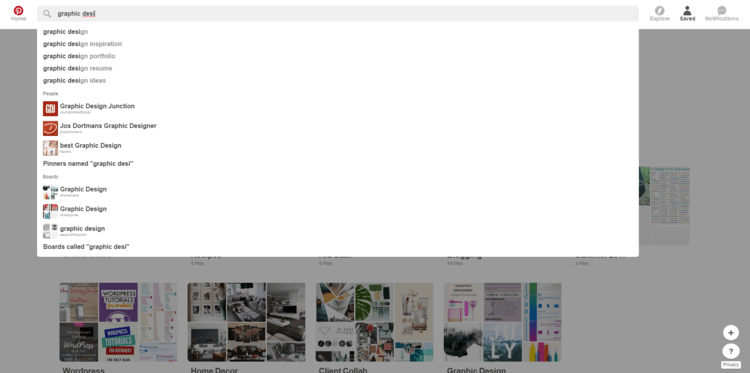
It runs on search. People type in what they need, and Pinterest matches pins to those keywords, the same way Google matches web pages to a search.
It sends people to your website. Every pin links somewhere, and Pinterest wants people to click through to the best result.
It doesn't need you to perform. There are no comments to keep up with and no stories to post every day. Pinterest shows the pin that best answers what someone searched for, which is why I've always called it the introvert's platform.
It keeps working after you post. A pin can keep showing up in search for months or years (more on that below).
You started your business to help people and solve a problem, and Pinterest rewards exactly that, with no hamster wheel of selfies required.
How Does Pinterest Marketing Work?
Chances are you do a lot of things to market your small business. Social media marketing, email marketing, in-person networking, speaking engagements, etc.
It can be overwhelming to stay on top of everything you need to do to keep a profitable business running. Graphics to create, posts to schedule, content to write, and on and on.
But as all online entrepreneurs know, just because you build it, doesn't mean they'll come.
You need to get traffic to your website to build relationships with potential customers and clients.
While Pinterest is one aspect of my digital marketing strategy, it's the #1 “social” traffic driver to my website and has been for years.
Pinterest marketing comes down to five steps:
Set up your profile with the right keywords. Use a free business account and put the words your ideal reader searches for in your profile, board titles, board descriptions, and pin descriptions. Find those keywords by searching on Pinterest itself, since the words people use there don't always match what they type into Google.
Decide where you want to send people. Pick the pages on your website that deserve the traffic: a blog post that answers a common question, a free guide, a product, or a landing page.
Create on-brand pin graphics. Use a vertical 2:3 size (1000 x 1500 pixels), fonts you can read easily on a phone, and photos that look like your brand. My go-to design tool is Canva Pro.
Write keyword-rich pin descriptions and pin at a pace you can keep. A steady rhythm you can hold for a year will serve you better than a burst of pins followed by three silent months. I used to batch my pins once or twice a month with Tailwind, so Pinterest kept running while I worked on everything else.
Mix your pin types. Static image pins and video pins both show up in search, so use whichever one fits the content you're sharing.
Batching is the answer to "I can't possibly do one more thing": once a month of pins is scheduled, Pinterest keeps working while you get on with everything else.
Why Is Pinterest Better for Long-Term Marketing Than Social Media?
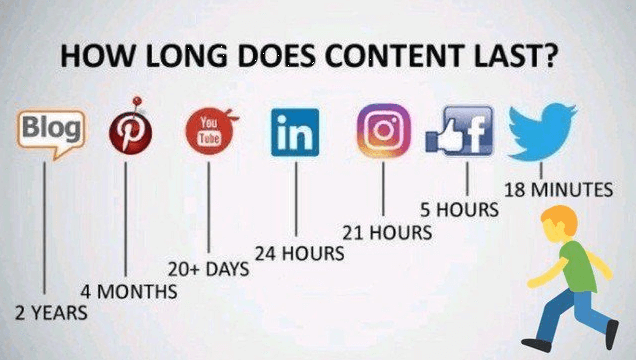
The biggest reason Pinterest works for a slower, saner kind of marketing is how long a pin keeps working after you post it.
I have a Pin for a blog I wrote way back in 2015 that continues to be one of my top 3 traffic drivers every month. That’s 11 years and counting a single piece of content has generated leads and sales for my businesses. I have many clients with the same experience as well.
The graphic below from Sprocket Websites shows a Pin “lasts” 4 months. But, I know that is a super conservative estimate based on my experience above.
Pins that last this long come with one catch: they outlast your offers.
Every business changes, and a pin can keep sending people to a sold-out product or a retired service for years.
📌When you take a page down, forward its old link to the closest page you have now (a 301 redirect) or send people to a friendly custom 404 page, so nobody clicking an old pin hits a dead end.
How Do You Use Pinterest to Build Your Email List?
Pinterest is one of the best tools I know for building an email list, because it brings you a steady stream of people who are brand new to you and already looking for help. No other platform I've used sends that kind of cold traffic to a website as consistently, and email is where those strangers get to know you, since you're talking to them in their inbox instead of hoping an algorithm shows them your next post.
Pin to a free resource. Send pins to a free guide, checklist, or swipe file that solves one specific problem for your ideal client, and make sure it connects to what you sell.
Try a quiz. A short quiz with the results sent by email is fun to take, and it tells you something about every person who signs up. Many quiz tools connect to your email platform and sort people by their result, so each one gets follow-up emails that fit. (The Social Media Burnout Self-Check on my book page works this way.)
Add an opt-in to the blog posts you pin. A blog post that answers a common question, with a related freebie inside it, gives Pinterest visitors a reason to stay and a reason to subscribe.
Segment as people sign up. Sort subscribers by what they signed up for or bought, so every follow-up email stays relevant to what that person asked for.
Count the email address as a win. If you sell products, it's easy to judge Pinterest only by sales, and an email address is someone telling you she wants to hear more from you.
Two stories from my agency days show how this plays out. The first is mine: when I dug into my own analytics, I realized a big chunk of my Pinterest traffic was landing on one particular blog post, so I built a free resource around that topic, and it became my most popular opt-in ever, turning Pinterest visitors into email subscribers every day for years.
The second is a client who started working with me in 2018, when our only goal was getting traffic from Pinterest. In January 2019, we took a deep dive into her analytics and mapped out a clear path based on the content her Pinterest audience loved most. Within a week she'd put together a free ebook and a low-cost upsell, and on the first day the ebook was live, she got 50 new email subscribers.
Are Pinterest Ads Worth It for Small Businesses?
Pinterest's ads, which most of us still call Promoted Pins, usually cost much less than Facebook and Instagram ads. Tailwind's breakdown puts a typical Pinterest click at $0.05 to $0.10, compared with $0.50 to $2.00 on Facebook and Instagram (Tailwind), and in WebFX's 2026 survey of marketers, 43% reported paying 20 cents or less per click on Pinterest (WebFX). Prices vary by industry and competition, so treat those as a starting point.
I've always said Promoted Pins work the way Facebook's Boost button is supposed to, and a promoted pin keeps gaining momentum after the campaign ends, because the saves and clicks it earned stay with it.
Set up the basics first. You'll need a business account, a claimed website, and the Pinterest tag installed on your site, which works like the Meta pixel and tells Pinterest who visits, signs up, and buys.
Promote pins that are already working. Start with pins that are getting saves and clicks on their own, and put ad money behind content with at least an email signup as the next step.
Start with a traffic campaign. Traffic campaigns are the simplest place to start. Once you know which pins people click, a conversion campaign can aim for signups or sales instead, and a few years ago one of my clients was paying 22 cents per email address with conversion campaigns.
Test two or three graphics. Point two or three pins with different designs (and the same description) at the same page, so the only thing you're testing is the graphic.
Give it time. Let a campaign run at least two weeks before you pick winners. I usually ran Pinterest ads in four-week cycles, since it's such a long-term platform.
Read the results. High impressions with low clicks usually means the targeting is right and the graphic needs work. Low impressions usually means the targeting is too narrow or the bid is too low.
Use your email list. Upload your list as a custom audience. Include it when you're offering subscribers a low-cost product, and exclude it when you're advertising a freebie, so you're not paying to reach people who already signed up. Re-upload it every quarter unless it syncs automatically.
The same rule from organic pins applies to paid ones: if the clicks are coming in and nobody signs up or buys, look at the page they land on.
Can You Sell Products With Pinterest Marketing?
If you sell physical products, Pinterest can do more than send traffic. Product pins show your current price and availability right on the pin (Pinterest Help), and Pinterest's own app for Shopify can sync your product catalog and install the Pinterest tag for you (Shopify App Store).
Link each pin to the exact product. Use a lifestyle photo of the product in use, link the pin to that specific product page, and save it to your most specific board (a sweater goes on your sweater board), since the board's keywords travel with every repin.
Give Pinterest shoppers a reason to buy. Offers that work well with Pinterest traffic include free shipping, a gift with purchase, buy-more-save-more pricing, a percentage of proceeds to a cause you care about, a refer-a-friend reward, or a coupon for joining your email list.
Keep time-limited offers off the pin itself. Pins live on for years, so a pin promising a sale that ended last spring frustrates people. Put the offer in a pop-up on the product page instead, and turn it off when the sale ends.
Make a Pinterest-only landing page. A product or landing page just for Pinterest visitors lets you tailor the offer and see exactly what Pinterest brings in.
How Do You Fix a Pinterest Strategy That Isn't Working?
If you've been putting time into Pinterest and the results aren't showing up, the fix usually lives in one of five places. I've used this same checklist for years, for my own Pinterest and for clients:
Use best practices. Start with the five steps above: keywords you found by searching on Pinterest itself, vertical pins people can read on a phone, and a pace you can keep. Pinning a YouTube thumbnail or an Instagram post usually falls flat, because it was made for a different platform and a different kind of attention.
Define your metrics for success. Decide whether you want traffic, email subscribers, or sales, because each one needs a different next step on the page Pinterest sends people to. If your strategy doesn't match your goal, spoiler alert: it won't be successful.
Serve your audience. Someone on Pinterest is actively searching for an idea, so meet her there. If she types in "marketing ideas" and finds your pin for 20 marketing ideas for small businesses, the blog post should deliver those ideas and offer one obvious next step, like a free swipe file she can grab with her email address.
Know your analytics. Once a month, look at which pages get the most visits from Pinterest in your website analytics, and make more pins for those. Your Pinterest visitors may love a completely different page than your Google visitors or your email list.
Know what to expect. Pinterest is a long-term strategy, so give it six months to a year for traffic and email signups to build, and plan 45 to 60 days ahead, since new pins take about that long to start circulating (pin your summer content in April). It won't fill your launch webinar next week.
Pinterest will get you traffic all day long, and it's your website's job to turn that traffic into readers, subscribers, and clients. If you're following the best practices, you know your goal, and visitors still aren't signing up or buying, look at the page they land on: the call to action, the next step, and whether every link works. Keep the timeline honest too, because a Pinterest visitor rarely reads one blog post and books a coaching package the same day, and that kind of decision usually takes months of building trust through your emails.
Can Pinterest Replace Social Media for Your Business?
For a lot of women entrepreneurs, Pinterest, a blog, and an email list can carry the marketing that social media used to carry, without the daily posting. That's how I run my own marketing now. I still have Instagram, LinkedIn, and Facebook accounts, and each one holds a bio, a pinned post, and a link that tells anyone who finds me there where to go next, while Pinterest, my blog, my email list, and podcast interviews do the work of bringing new people in.
In my book, I call this Signposts, Not Stages: your social profiles can work like forwarding addresses, and you don't have to perform on them for your business to grow. If you're thinking about stepping back from Instagram, How to Quit Instagram and Market Your Business Without It walks you through it.
Conclusion
Is Pinterest social media? It lives in the same corner of your phone as Instagram, and it works like a search engine, which is exactly what makes it worth your time: people come looking for answers, Pinterest sends them to your website, and a good pin can keep doing that for years while you get on with your work and your life.
Set up your profile with the right keywords, send people to a page with a clear next step, build your email list from the visitors Pinterest brings you, add ads once a pin is already working, and give yourself six months before you judge the results.
Done performing for the algorithm?
If social media has started to feel like a job you never applied for, The Social Media Burnout Cure walks you through what all that posting is costing you and how to build marketing that keeps working while you're offline, with search, email, and relationships doing the heavy lifting.
Want Help Deciding Where Pinterest Fits in Your Marketing?
If you're putting hours into marketing and can't tell which of it brings in clients, my 6-week, 1:1 marketing coaching starts with your own numbers, including what Pinterest is or isn't sending you, and ends with a plan you can carry out yourself or hand to your team, without living online.
Frequently Asked Questions
-
You can follow people and save their pins on Pinterest, but most people use it the way they use Google: they search for an idea and click through to the best result. That's why I plan pins around keywords, the same way I'd plan a blog post for Google search.
-
No. Pinterest shows pins based on what someone searched for, so a brand-new account with well-keyworded pins can show up right next to accounts with thousands of followers. I go deeper on this in Do Followers Matter on Pinterest?
-
Usually, yes. A Pinterest click often costs a fraction of what Facebook and Instagram charge, though prices vary by industry and competition. The best results come from promoting pins that already get saves and clicks on their own and sending them to a page with a clear next step.
-
Usually it's one of five things: the basics (keywords, vertical pins, a steady pace), a goal that doesn't match the page people land on, a landing page with no clear next step, not knowing which posts Pinterest sends traffic to, or expecting results faster than Pinterest delivers them. Give a new strategy six months to a year before you decide it isn't working.
-
Pick a pace you can keep for a year, because showing up steadily matters more than pinning a lot at once. Fresh pins (new images, even for an older blog post) give Pinterest something new to show, and I break down how to make them without burning out in 9 Things You Need To Know About Fresh Pins on Pinterest.
Related Posts & Mentioned In This Blog:
Pivoting in Business: Why I Closed My Pinterest Marketing Agency
The Social Media Burnout Cure (and the free Social Media Burnout Self-Check)
Business Insider (via AOL): Why Pinterest's CEO is betting the company's future on search