
A New Book by Cara Chace
The Social Media
Burnout Cure
How to ditch the scroll, quiet your nervous system, and market your business without the chaos of the content treadmill.
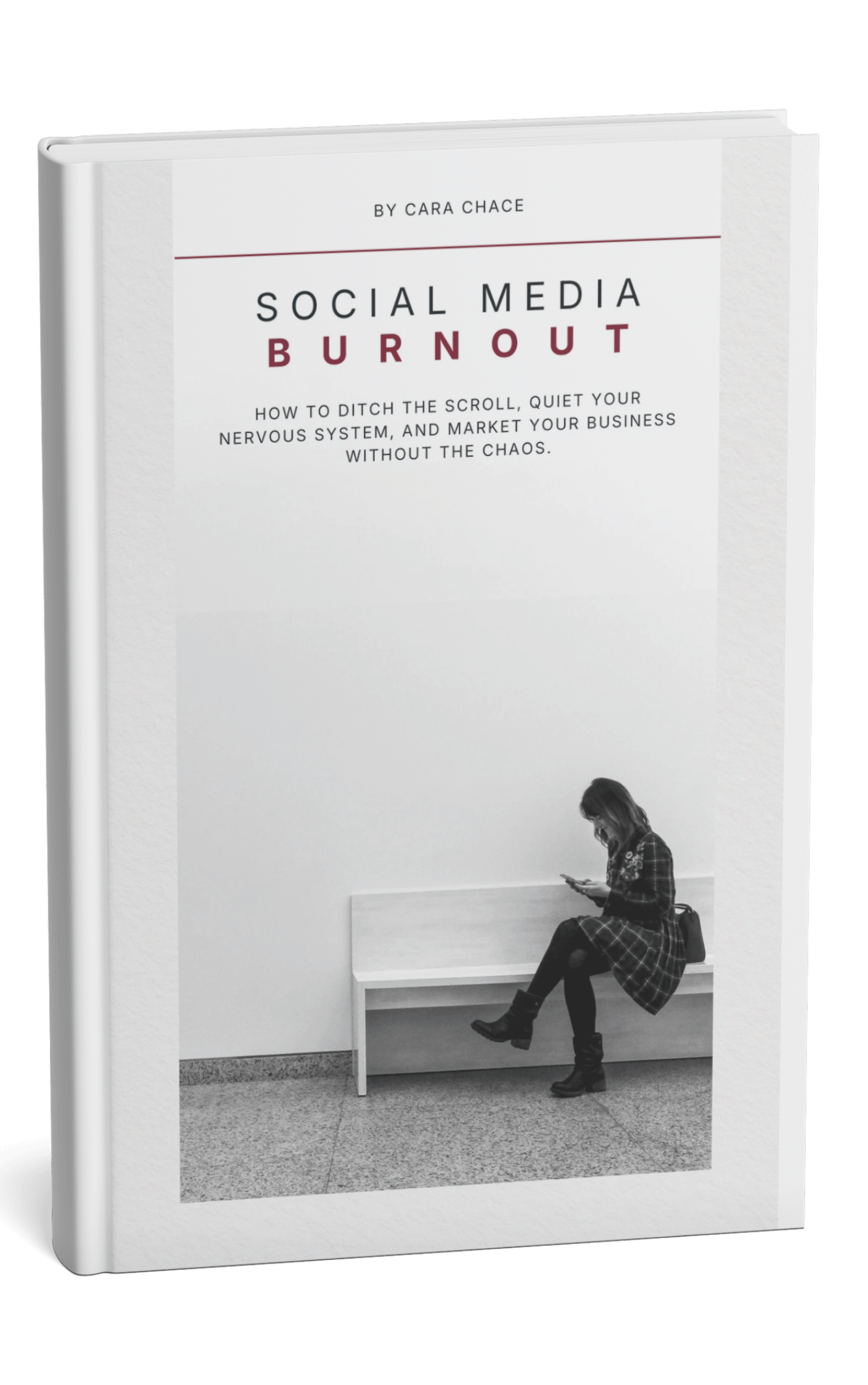
For women entrepreneurs who are done performing for social media algorithms.
If posting, checking, comparing, and keeping up with the content treadmill have started affecting your body, creativity, attention, or relationship with your business, this book will help you name what’s happening and rethink what social media is actually costing you.
COMING
FALL 2026
You were told social media is part of running your business.
Nobody told you it can quietly burn you out.
You were told it was visibility, community, consistency, authority, relationship-building, and “just how things work now.”
But for a lot of women entrepreneurs, social media has become more than a marketing task. It has become a source of pressure, comparison, decision fatigue, creative exhaustion, and constant nervous-system activation.
That is social media burnout.
And it can hide inside what looks like responsible business behavior.
— 01 —You open the app to "just post something" and lose an hour to the scroll, checking, or comparison, again.
— 02 —You’ve tried content calendars, batching methods, templates, and 30-day challenges. The pressure still comes back when you can’t keep up.
— 03 —Your nervous system feels fried. You’re anxious, wired, tired, and starting to realize this may be bigger than a productivity problem.
— 04 —Part of you is ready to quit social media entirely. Another part panics: “But what happens to my business if I’m not always visible?”
The Symptoms You’ve Been Ignoring
Social media burnout hides in plain sight.
It doesn’t always look like collapsing at your desk. It can look like a slow erosion of your energy, creativity, focus, privacy, and willingness to keep showing up for your business.
Because social media is treated as normal business behavior, these symptoms are easy to explain away as “just being busy,” “needing a better content system,” or “not being disciplined enough.”
But your body may be telling a different story.
The book helps you name the full symptom picture, have the “oh, so that’s why I feel this way” moment, understand what constant social media input is doing to your body and mind, and rethink what’s actually required to market your business before you quit everything in a panic.
Social Media Burnout SymptomsDread before posting. The thought of opening the app creates a physical tightness in your chest.
Compulsive checking. You refresh notifications even when nothing important is happening.
Wired and tired. Exhausted all day, but can't sleep. That feeling often points to nervous system dysregulation.
Creative shutdown. The ideas that used to flow now feel forced, performative, or completely gone.
Resentment of your own business. You love what you do, except for the part where you have to package, post, and stay visible.
Constant comparison spiral. Every scroll becomes a scoreboard for your worth, work, or visibility.
Physical symptoms. Jaw tension, shallow breathing, stomach issues, headaches, or a body that cannot settle.
Decision fatigue by 10 a.m. You have already made dozens of micro-decisions about what to post, whether to respond, what to ignore, and whether you should be doing more.
Social media uses your nervous system as fuel.
This isn’t another book about “doing social media better.”
It’s the story of what happened when a former Special Agent and social media manager for Megadeth finally stopped performing for an algorithm and started asking harder questions:
What is this doing to my body?
What is this doing to my creativity?
What is this doing to my business?
And why did I think constant visibility was the price of being taken seriously?
The Social Media Burnout Cure is for women entrepreneurs who are ready to stop treating social media exhaustion like a personal failure and start seeing it as a signal.
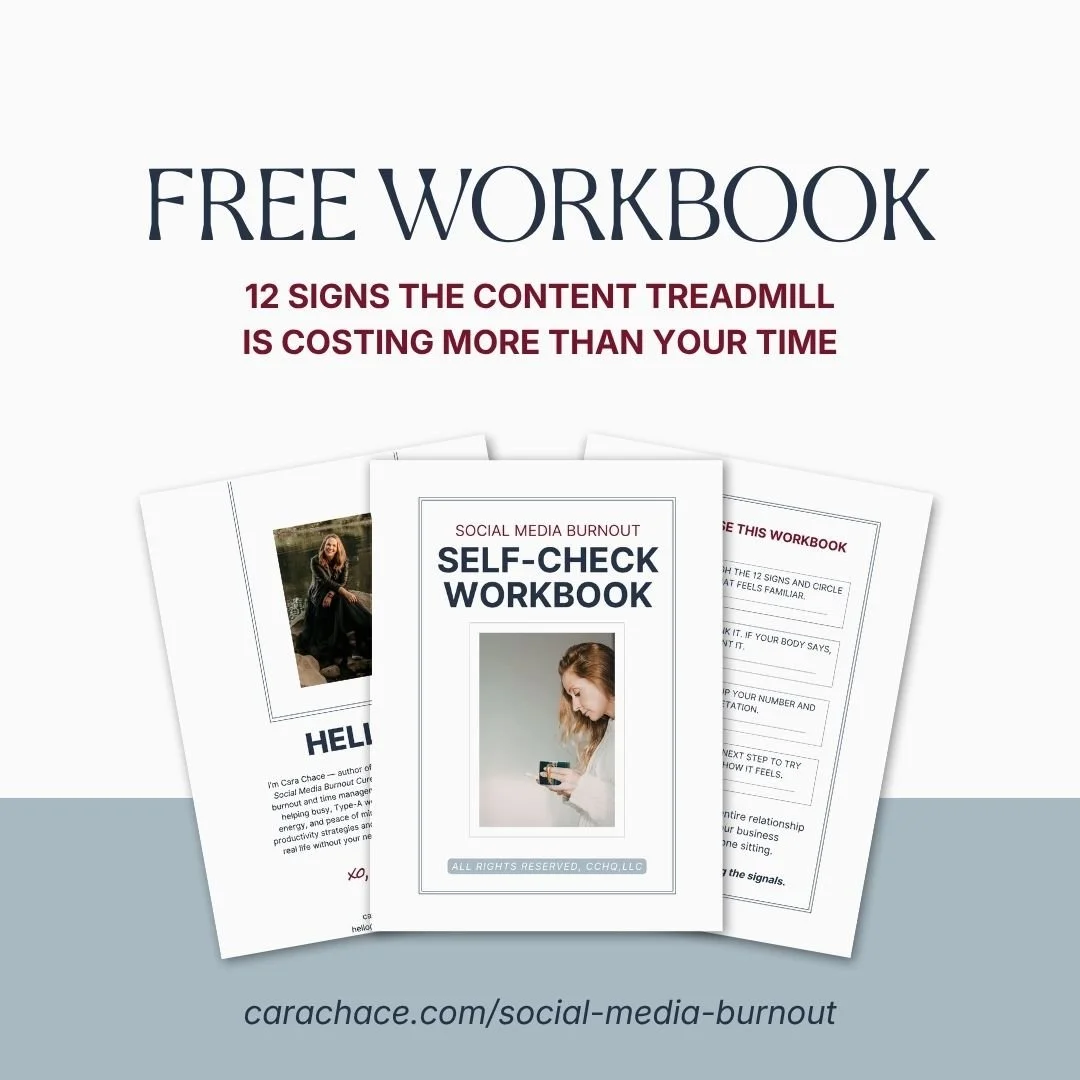
Coming Fall 2026. Get the free Social Media Burnout Self-Check Workbook when you join.
Your Body Has Been Trying To Tell You Something
Why social media burnout can feel physical before you know what to call it.
Social platforms are built to keep you checking, reacting, comparing, and coming back. Over time, that constant input can train your body into a state of low-grade alert that starts to feel normal.
That is why social media burnout is not always something you think your way through first.
Sometimes your body notices before your brain has language for it.
01What dysregulation feels like
Constant low-grade anxiety. Trouble focusing on one thing. A body that reacts to a notification like it matters more than it does. Many entrepreneurs have been living in this state for years without realizing the platform itself may be part of the pattern.
02Why it's not fixed by "doing less"
If your nervous system has been running on constant input, one quiet weekend may not be enough to reset it. Sometimes you have to reduce the input, rebuild your baseline, and notice what your body does when it is not being asked to stay constantly available.
03What a different relationship with visibility can feel like
Showing up without a pit in your stomach. Creating without immediately performing. Letting parts of your life stay private. Building a business that does not depend on daily checking, constant output, or turning every thought into content.
If this sounds familiar, start with the free self-check.
Join the launch party for The Social Media Burnout Cure and get the free Social Media Burnout Self-Check Workbook: 12 signs the content treadmill is costing more than your time.
You’ll also receive release updates, early access details, exclusive launch invites, and a few useful excerpts from the book as Fall 2026 gets closer.
Inside the Book
Part memoir. Part permission slip.
Part practical framework.
A teaching memoir for women entrepreneurs who are over achievers, deeply capable, and completely wrung out from marketing their businesses in a system that demands constant visibility. Written by someone who spent years inside the social media industry before building a business that no longer required her nervous system as collateral.
Part OneThe Story
How a Special Agent turned social media manager burned all the way out — and what she learned on the way back.
Why "being good at social media" made the burnout harder to see
The Megadeth years and what algorithmic performance really costs you
What it looks like when your identity gets tangled up with online visibility
Why leaving the scroll can feel simple on paper and complicated in your body
The physiological side of burnout most marketing advice ignores
Part TwoThe Framework
A practical, nervous-system-aware framework for understanding what social media has been costing you, and rethinking the visibility rules you were told your business depends on.
How to recognize when social media is no longer just a marketing task
Why content systems, batching, and “just be consistent” advice often do not solve the deeper problem
How to reduce social media without making a panic decision
What it means to rebuild trust with visibility, quiet, and slower forms of business growth
Who This Book Is For
Written for the overwhelmed business owner who is done trading her nervous system for visibility.
This book is a fit if you see yourself in the list below.
You’re a solo business owner, service provider, coach, consultant, or creative whose business is working, but starting to feel heavier than it should.
You feel pressure to keep showing up online, even when your body, brain, and creativity are asking for a different way.
You’re experiencing content creator burnout or entrepreneur burnout and wondering whether the content treadmill is still worth the cost.
You’re quietly considering quitting or reducing social media, but you need a plan that protects your business.
You want small business marketing strategies that don’t require daily content performance.
Who it's not for.
This book is not for you if you want to grow your follower count faster, hack the algorithm, or turn burnout into another mindset problem.
It is not an Instagram growth playbook. It is not a discipline lecture. And it is not going to tell you that the answer is simply to be more consistent.
There are a hundred books for that.
This is not one of them, and that is the whole point.
Sits on the shelf between business and personal development.
If these books live on your nightstand, The Social Media Burnout Cure belongs there too.
The Shallows
Nicholas Carr
What the internet is doing to our brains. The attention and cognition case.
Burnout
Emily & Amelia Nagoski
The stress-cycle science that reframed burnout for a generation.
Off the Grid
Amelia Hruby
The case for leaving social media as a business owner. Adjacent territory.
The Social Media Burnout Cure
Cara Chace
The missing conversation for women entrepreneurs whose bodies, creativity, attention, and businesses have been shaped by the pressure to stay constantly visible.
Early Praise
-
![Jacqueline Fisch testimonial for The Social Media Burnout Cure book by author and coach Cara Chace]()
I've quit and gone in on social media for my business many times. And I've looked at the data — it didn't drive business for me. This book is the no-BS friend you need, giving you the truth behind the algorithms and a serious reality check on where you could be wasting your precious time and energy. The combination of personal stories, facts, and practical ways to have a successful business today without relying solely on social media is a must-read for any business owner — especially women.
Jacqueline Fisch, Founder of The Intuitive Writing School
-
![Stacey Aaronson testimonial for The Social Media Burnout Cure book by author and coach Cara Chace]()
I was drawn in to Cara’s book from page one. It’s highly engaging, wonderfully relatable, and just the “cure" women entrepreneurs need.
Stacey Aaronson, founder of The Book Doctor Is In
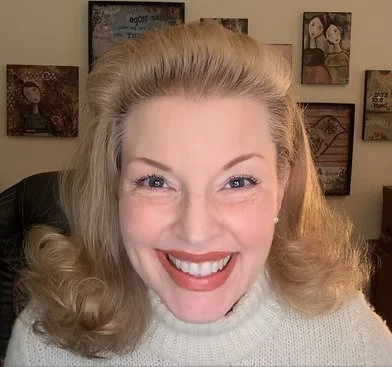

Meet the Author
Cara Chace
Cara Chace is a burnout and business coach for women entrepreneurs. She spent two years managing social media for Megadeth, then built and ran her own digital marketing agency for a decade, giving her a front-row seat to how quickly online visibility can turn into a business requirement, a performance loop, and a nervous-system drain.
After years inside the content machine, her own body made it clear that “being good at social media” was no longer the win she thought it was. She rebuilt her business around sustainable marketing, more energy, and business rhythms that don’t depend on constant output
She’s been featured in Authority Magazine, Thrive Global, Altitude Summit, Kit, Showit, Tailwind, Podia, and more. Today, she helps women entrepreneurs reduce urgency, reclaim their time and energy, and build businesses that don’t require their nervous systems as collateral.
“I’m not anti-social-media. I’m anti-grinding-yourself-to-dust for platforms that don’t add more to your life or business” — Cara Chace

Frequently Asked Questions
Answering the real questions burned-out entrepreneurs are asking.
-
Social media burnout is the physical, creative, and emotional depletion that can happen when constant online visibility becomes part of running your business. For entrepreneurs, it can show up as dread before posting, compulsive checking, comparison spirals, creative shutdown, decision fatigue, and resentment toward the business you used to love.
-
Common symptoms include dread before opening the app, checking notifications when nothing important is happening, feeling wired and tired, losing creative energy, comparing yourself constantly, and feeling like you can’t step away without hurting your business. Many business owners mistake these signs for poor discipline, when they may actually be signals of overload.
-
Not exactly. Entrepreneur burnout can come from many parts of running a business. Social media burnout is more specific: it comes from the pressure to stay visible, responsive, and constantly performing online as part of your business.
-
It overlaps, but it is not exactly the same. Content creator burnout usually focuses on the exhaustion of producing content. This book is for entrepreneurs who may not identify as creators, but still feel trapped by the expectation to package their thoughts, life, work, and expertise into constant content.
-
No. This is not an Instagram growth book, a content calendar system, or a discipline lecture. The Social Media Burnout Cure is about understanding what constant social media input is doing to your body, attention, creativity, and business identity.
-
No. The book is not about forcing a dramatic exit. It is about understanding your relationship with social media, reducing the inputs that are costing you most, and deciding what role social media should or should not play in your business.
-
Yes, many businesses can run with little or no social media, but the right answer depends on your business model, audience, and existing visibility channels. The book does not promise a one-size-fits-all replacement plan. It helps you question the assumption that social media must be the center of your business.
-
Marketing without social media usually depends on steadier channels like email marketing, SEO, referrals, podcasting, partnerships, past clients, and direct relationships. The book discusses these as alternatives to constant online performance, but its deeper focus is helping you rethink the visibility system you were taught to depend on.
-
It can support a social media detox, but it goes deeper than simply deleting apps or taking a break. The book looks at why stepping away can feel threatening when your business, identity, visibility, and nervous system have adapted to the platform.
-
This book is for women entrepreneurs, solo business owners, service providers, coaches, consultants, and creatives who are capable and organized, but exhausted by the pressure to stay visible online. It is especially for the overwhelmed business owner who suspects social media is costing more than time.
-
The Social Media Burnout Cure is coming Fall 2026. Join the launch list to receive release updates, early access details, useful excerpts, and the free Social Media Burnout Self-Check Workbook.
-
Yes. Chaos Detox is the companion course — a flexible, practical program with an AI planning assistant that helps you actually implement what the book teaches. You don't need it to benefit from the book, but it's there if you want the extra support.
No spam. No Algorithm. Unsubscribe anytime.